
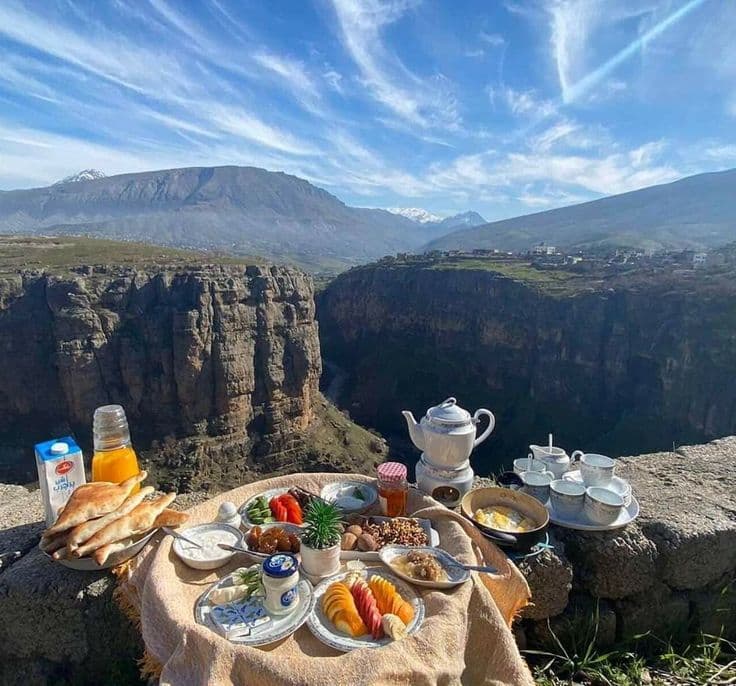
Iraqi & Kurdish Cuisine
Discover the rich tapestry of flavors that make Iraqi and Kurdish cuisine one of the world's most ancient and diverse culinary traditions
A Culinary Journey Through Iraq
Iraqi cuisine represents one of the oldest culinary traditions in the world, dating back some 10,000 years to the ancient Mesopotamian civilizations. The fertile lands between the Tigris and Euphrates rivers have provided abundant ingredients, while cultural exchanges with neighboring regions have enriched the country's culinary heritage over millennia.
Kurdish cuisine, while sharing similarities with broader Iraqi food culture, has its own distinct characteristics. With abundant use of herbs, seasonal vegetables, and slow-cooking techniques, Kurdish dishes are celebrated for their rich flavors and nutritional value.
Traditional Dishes
Kebab
Grilled meat on skewers, typically prepared with lamb or beef, seasoned with a blend of aromatic spices and served with grilled vegetables, rice, and flatbread.
Throughout Iraq, especially Baghdad
Very popular throughout the country
Dolma
Vegetables such as grape leaves, peppers, tomatoes, eggplants, and onions stuffed with a savory mixture of rice, minced meat, herbs, and spices, then slow-cooked to perfection.
Baghdad and Northern Iraq
Common throughout Iraq and Kurdistan
Quzi
A festive dish of roasted lamb served over aromatic rice, garnished with nuts and raisins, often prepared for celebrations and gatherings.
Central Iraq
Popular for celebrations and special occasions
Kubba
A family of dishes made with bulgur wheat or rice and filled with seasoned ground meat, onions, and spices, either fried, baked, or boiled.
Mosul and Northern Iraq
Popular throughout Iraq and Kurdistan
Tepsi Baytinijan
Layers of fried eggplant, potatoes, and seasoned meat cooked in a rich tomato sauce with aromatic spices.
Baghdad and Central Iraq
A staple in many Iraqi households
Maqluba
A traditional 'upside-down' dish consisting of meat, rice, and fried vegetables placed in a pot, which is flipped upside down when served, creating a layered dome of flavors.
Baghdad and throughout Iraq
A beloved family dish served at gatherings and celebrations
The Unmatched Iraqi Hospitality
In Iraq, food is more than sustenance—it's an expression of generosity and welcome. Visitors to Iraq are often surprised by the extraordinary level of hospitality they experience, especially when it comes to food sharing.
"To share food is to share life" — a common Iraqi saying that embodies the culture's approach to hospitality.
It's common practice throughout Iraq for locals to offer fruits, vegetables, and home-cooked meals to visitors completely free of charge. Whether you're visiting a small village, shopping at a local market, or simply passing by a farm, don't be surprised if you're gifted bags of fresh produce or invited to share a meal with a family you've just met.
This generous tradition extends beyond individual hospitality—many restaurants may refuse payment from first-time visitors or tourists, considering it an honor to share their culinary heritage. This deeply-rooted custom reflects the Iraqi belief that guests are blessings and should be honored with the very best the household can offer.
Culinary Traditions & Customs
Hospitality & Sharing
Iraqi and Kurdish cultures place immense value on hospitality. Meals are social experiences meant to be shared among family members and guests. It's common to serve generous portions and insist that guests take second or third helpings as a sign of respect and generosity.
Bread as a Staple
Bread holds a sacred position in Iraqi culture. The most common variety is flat bread, often baked in a traditional tandoor oven. It's not just a food item but plays a central role in the meal, used to scoop up food or soak up sauces and stews.
Tea Culture
No Iraqi meal is complete without tea, typically served very sweet in small glass cups. Tea drinking is a social ritual that extends beyond mealtimes, offered to guests at any time of day as a gesture of welcome.
Seasonal Cooking
Traditional Iraqi and Kurdish cooking follows seasonal patterns. Spring brings dishes featuring fresh herbs and vegetables, while winter meals include heartier stews and soups. This practice not only provides nutritional balance throughout the year but also connects people to the agricultural rhythms of their regions.
Experience These Flavors in Iraq
The best way to truly appreciate Iraqi and Kurdish cuisine is to experience it in its homeland. Plan your culinary adventure today and discover the authentic tastes and traditions of this ancient land.